 Credit

You need to upload a photo, but the website says "maximum 1000px wide." Your image is 4000 pixels wide. You need to change its pixel size. This is a common problem. A pixel resizer is the tool that solves it. It changes the dimensions of your image to meet specific requirements.
This process is called resampling. It's different from just cropping or zooming. Let's talk about how it works and how to do it right.
What Does 'Changing Pixel Size' Actually Mean?
Every digital image is composed of tiny color squares called pixels, and the "pixel size" is the total number of these squares across the width and height.
For example, an image that is 1000px by 1000px contains one million pixels (1000 x 1000). Reducing or increasing the pixel size essentially changes the image's resolution and physical dimensions for screen display.
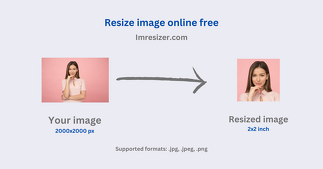
Why You Need to Convert Pixels and Resize Images
A pixel resizer may be necessary for a variety of reasons. Each has a distinct objective.
Fulfilling Website Requirements: Strict restrictions apply to many platforms. Marketplaces, online forms, and social media platforms frequently demand that banners and profile photos have precise measurements. Your photo is made to fit with a resizer.
Enhancing Website Speed: Web pages that contain large, high-resolution photos load more slowly. Your site will load more quickly if you reduce the size of their pixels before uploading them. This is essential for maintaining visitors' interest.
Saving Storage Space: A smaller image has less data. This means it takes up less room on your phone, PC, or cloud drive. You can store more photos without running out of space.
Preparing for Print: While print employs DPI (dots per inch), it starts with pixel measurements. For a high-quality 10-inch print, a printer might require a file that is 3000 pixels wide. Resizing guarantees that your photo will seem crisp on print.
Key Features of a Good Online Pixel Resizer
Not all resizing tools are the same. A reliable one, like Pixelfox.ai, gives you control and maintains quality.
It should be possible to specify new sizes by pixels, percentages, or even particular print dimensions using multiple dimension inputs. You can work however you choose thanks to this flexibility.
The most crucial feature is Aspect Ratio Lock. When the aspect ratio is locked, both height and width change simultaneously. There won't be any stretching or squashing of your photograph. If you require a particular deformed shape, you can typically turn this on and off.
Superior Resampling Algorithms: The tool must eliminate pixels when reducing the size of an image. It must produce new ones as you enlarge it. This is intelligently done by sophisticated algorithms to prevent blurriness and maintain detail. These clever techniques are used by Pixelfox.ai to maintain the clean appearance of your scaled photographs.
Instant Preview: A real-time preview of your modifications ought to appear. This enables you to test for distortion or quality loss prior to completing the edit.
Batch Processing: You may resize several photos at once using this fantastic tool. If you need to compile a folder of images for an album or website, this saves a ton of time.
How to Change the Pixel Size of an Image Without Losing Quality
You can follow a simple process to get the best results. Quality loss is biggest when you enlarge an image, but you can minimize it.
Step 1: Use the Right Tool. Open a dedicated online resizer like Pixelfox.ai in your browser. These tools are built for this one job and often do it better than general-purpose software.
Step 2: Upload your image in step two. Drag your picture into the window of the browser. The current pixel dimensions will be displayed by the tool.
Step 3: Establish Your New Dimensions in Step Three. Enter the height or width you want. Make sure the chain-link or "Maintain Aspect Ratio" icon is turned on. Your proportions remain accurate as a result.
Step 4: Select a resampling technique, if one is offered. To reduce the size of an image, select "Bicubic Sharper" or a comparable option. Some tools offer a "Enlarge" or "AI Upscale" mode that intelligently adds detail to make it larger.
Download your resized image in step five. Preview it, then hit download. A new image file with the pixel size you selected is now available.
You cannot add true detail that wasn't there originally. Making a tiny image huge will always cause some blur. The goal is to manage this process as well as possible.
The Pixelfox.ai Approach to Resizing
We created our resizer to be easy and powerful. You won't discover advertising or misleading options. Just a simple interface that allows you to upload an image, enter the required size, and receive an exact replica.
It maintains the sharpness of your resized photos with sophisticated processing. The aspect ratio locks by default to protect you from mistakes. It’s also completely free and works on any device—phone, tablet, or computer—without a download. We believe a core editing tool should be fast, reliable, and available to everyone.
FAQ
Q: How can I change the pixel size of an image for free?
A: Use a free online tool like Pixelfox.ai. Upload your image, enter the new width or height, and download the resized version instantly.
Q: What is the difference between resizing and cropping?
A: Resizing changes the dimensions of the entire image. Cropping cuts away parts of the image to change its composition and size.
Q: Does resizing an image reduce its quality?
A: Making an image significantly larger can reduce quality, causing blurriness. Making an image smaller usually maintains quality well. Using a good resizer with smart algorithms minimizes quality loss.
Q: How do I convert pixels to inches?
A: You need to know the DPI (dots per inch). For web, 72 DPI is standard. For print, 300 DPI is common. The formula is: Inches = Pixels / DPI. So, a 1200px image at 300 DPI is 4 inches wide.
Q: Can I resize multiple images at once?
A: In agreement. Some online tools, including Pixelfox.ai, offer batch processing. This allows you to resize a whole folder of images to the same dimensions in one go.