 Credit

What is an AI Smile Filter?
An AI smile filter is a program that recognizes faces in pictures and modifies their mouths to produce a genuine smile. The eyes, cheeks, and even the skin surrounding the mouth are all adjusted using advanced models to make the expression appear entirely genuine rather than artificial.
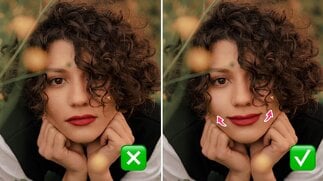
How AI Creates a Realistic Smile
This isn't a simple copy-paste job. The best AI tools work in a few key steps:
1. Deep Face Analysis: Dozens of facial points are first mapped by the AI. It locates the jawline, cheekbones, eyes, and corners of the lips.
2. Expression Generation: The AI creates a new mouth shape that blends in with the individual's facial structure by using information from millions of real smiles.
3. Smooth Blending: The updated smile is then distorted onto the original picture. To make everything fit flawlessly with the rest of the picture, the tool modifies the lighting, teeth, and skin texture.
Tools that comprehend the anatomy of the face produce the greatest results. In a genuine smile, the cheeks raise and the eyes wrinkle, giving the appearance of "crow's feet." Software that merely modifies the mouth will appear eerie and unreal.
Top Tools to Make a Photo Smile Online
Based on our hands-on testing, these platforms deliver the best results for fixing smiles.
1. Pixelfox.ai: The Greatest for Organic, Superior Outcomes
Our best option for creating realistic-looking smiles is Pixelfox.ai. Its artificial intelligence excels at interpreting the minute details that others overlook. It produces an expression that complements the subject's facial shape and the lighting in the picture, not just a generic smile. We discovered that it is really good at creating the appearance of natural closed-mouth smiles, which is a far more difficult process than creating teeth.
Ideal for: Anyone in need of a perfect, convincing edit for a significant photo or portrait.
2. Canva's SmileAI: The Greatest for Social Media and Speed
This really quick and easy-to-use tool is available within Canva. It's ideal for rapidly editing a group shot for a presentation or social media post. It's perfect for casual use because you get a few free edits. Although they occasionally lack the nuanced realism of more committed editors, the results are good for temporary adjustments.
Ideal for: Users of Canva and everyone else in need of a quick, cost-free smile fix for digital projects.
3. The Greatest Free Tier Choice: Fotor's AI Smile Generator
A reliable AI grin generator is part of Fotor's collection of photo-editing tools. You can test the feature with the free version, but outputs will be watermarked. Its accessibility and ease of use within a web browser are its main advantages. It's a terrific place to start if you want to see if this technology works for your photo without spending any money.
Ideal for: Novices who wish to try smile editing out without committing.
How to Add a Smile to a Photo: A Simple Guide
The process is similar across most platforms. Here’s how it generally works:
1. Upload Your Photo: Upload the image you wish to edit to the website of your choice (such as Pixelfox.ai).
2. Let the AI Detect Faces: The tool will automatically find the faces in the image. You usually select which face you want to edit.
3. Choose Your Smile: Some editors offer a slider to adjust the smile intensity. Others generate a result instantly.
4. Download the Result: Process the image, see the preview, and download your new, smiling shot. Usually, the entire procedure takes less than a minute.
Pro Tip: Clear, front-facing, and well-lit source photographs are the best. Dark shadows, profiles, and faces hidden by hands or glasses are more difficult for the AI to recognize.
When a Smile Editor Can't Work Miracles
Although AI is strong, it has its limitations. It has trouble with:
Extreme Angles: It is quite challenging to edit faces that are pointing sideways or far down.
Low-Resolution Images: The AI doesn't have enough information to operate with when faces are small and indistinct.
Significant Barriers: The AI must create too much information if the majority of the mouth is hidden by a hand, hair, or mask.
Matching a Specific Smile: Generally speaking, you can't instruct the AI to replicate a smile from another image. It uses its training to create a new one.
Plausibility, not perfection, is the aim. However, the outcomes can be really impressive for the majority of photos.
Frequently Asked Questions (FAQ)
Q1: Is there a watermark-free, totally free grin editor?
A: A watermark is added to the majority of fully free editions, while certain tools, such as Fotor, offer free trials or credits. High-end tools such as Pixelfox.ai provide results without watermarks.
Q2: Is it possible to make an ancient photo smile?
A: In agreement. AI smile editors are great for bringing back ancient pictures of people without smiles. For the best outcome, just make sure the scan is as high-quality as possible.
Q3: Is using a smile editor morally acceptable?
A: In general, it's okay to share private images with loved ones. However, before editing and sharing someone else's photo, especially for business or professional purposes, you should always obtain their consent. Never use it to harm someone by misrepresenting them.
Q4: Why did my Photoshopped smile appear phony?
A: This typically occurs when the tool uses a low-powered AI that fails to correct the eyes and cheeks, or when the source photo was taken at an unfavorable angle or with poor resolution. This risk is significantly decreased by using a more sophisticated editor like Pixelfox.ai.