 Credit

You spend hours shooting a video.
Then you hit play and see grain, blur, weird colors, and a face that looks like it was filmed with a potato.
You upload it anyway… and watch people drop off after 3 seconds. 😮💨
If you searched for “????? ???? ??????? ?????????”, you are probably tired of that pain.
You want AI that can fix bad video quality, not just add another filter that makes everything look like a 2012 Instagram post.
This guide breaks down what people really mean when they search ????? ???? ??????? ?????????, how AI video enhancers work, which tools are worth your time in 2025, and how to use Pixelfox AI to get pro‑level results without touching Premiere, DaVinci, or Photoshop.
Yes, you can keep your sanity. And your wallet.
What people really want when they search “????? ???? ??????? ?????????”
When users type “????? ???? ??????? ?????????” in Google, they usually want one thing:
“Give me an AI tool that takes my noisy, blurry, low‑res clip and makes it look clean and sharp. Fast. And not crazy expensive.”
In practice, that usually means they want to:
- Upscale old or low‑resolution video to 1080p or 4K
- Remove noise and grain from low‑light shots
- Fix color and contrast so skin tones look normal
- Clean faces and skin without turning people into plastic dolls
- Remove ugly subtitles or burned‑in text
- Do all of this without pro editing skills
That is the gap AI video enhancers try to fill.
Reports from Wyzowl and HubSpot keep saying the same thing every year:
video is one of the top ways brands talk to people now. And people bounce fast if the quality looks cheap. So fixing quality is not “nice to have”. It is revenue.
Why video quality matters more than ever
Let’s keep this simple.
- People watch video everywhere: TikTok, Reels, YouTube, product pages, ads
- Their eyes are used to 4K Netflix‑level quality
- So when they see noisy, washed‑out footage, they swipe away
Research from Nielsen Norman Group and Forrester points at the same idea:
clear visuals increase trust, and trust increases conversions.
Bad visuals send a “this is low effort” signal.
You feel this when you scroll too.
You trust the sharp, clean product video more than the dim, shaky one with heavy noise.
That is why AI video enhancement is hot.
You do not always have a great camera, good lights, and a colorist.
But you still need your video to look decent.
The main problems ????? ???? ??????? ????????? needs to solve
To pick the right tool, you need to know what you are actually trying to fix.
1. Low resolution and soft details
You shot in 720p. You need to post in 4K.
Or you got a screen recording that looks soft and muddy.
Good AI enhancers use super‑resolution models to “guess” extra pixels.
They sharpen edges and restore detail that normal upscaling just cannot do.
2. Noise and grain from low‑light shots
Night vlogs. Wedding parties. Dark rooms.
Your sensor screams. Your video looks like a snowstorm.
Here you need AI denoising that:
- Removes random grain
- Keeps important details like eyes and text
- Uses data from multiple frames to avoid motion smearing
This is exactly what something like the AI Video Denoiser in Pixelfox AI is built for.
3. Bad color, weird white balance, flat contrast
Your clip looks gray. Whites are yellow. Skin is green.
People think you are sick. Not ideal.
AI can now auto‑balance color and contrast with scene analysis.
It learns what “normal” skin and “neutral” whites look like and pushes your clip closer to that.
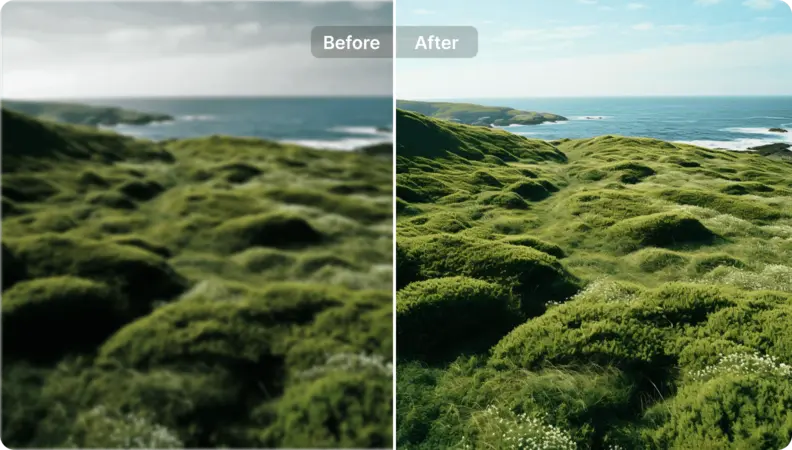
4. Harsh or unflattering faces
Front camera. Office lighting. You slept 4 hours.
The camera sees everything. You wish it didn’t. 🥲
Face‑aware AI can:
- Smooth skin a bit
- Reduce eye bags and blemishes
- Keep texture so you do not look like a wax doll
Tools like the Instant AI Portrait Enhancer for Videos & Selfies inside Pixelfox AI handle this part for you.
5. Burned‑in subtitles or text you no longer want
You reused a clip with old subtitles in the wrong language.
Or the client sent you a video with huge, ugly captions baked into the image.
You search something like “????? ????? ??????? ?????????” or “remove subtitles from video”.
What you actually need is an AI subtitle remover that can inpaint text areas and rebuild clean pixels underneath.
That is where a tool like PixelFox AI Subtitle Remover comes in.
It cleans the frame so you can add better subtitles later.
How AI video enhancers actually work (in plain language)
No math. No PhD. Just the idea.
Most AI enhancers use deep learning models that were trained on huge sets of:
- Low‑quality video
- Matching high‑quality versions
The model learns patterns:
- What sharp edges look like
- How faces should look
- How noise usually appears
- How colors should balance in normal scenes
Then, when you upload your own bad clip, the AI:
- Analyzes each frame and the motion between frames
- Predicts a cleaner, higher‑res version of that frame
- Rebuilds missing details and reduces noise
- Applies extra steps like color fix or face retouch
So it does what a pro editor would do by hand.
Only it does it faster, and it does it for people who do not want to spend six hours in Premiere.
Best tools for ????? ???? ??????? ????????? in 2025
Let’s talk tools. And yes, there are many.
People searching “????? ???? ??????? ?????????” often want a short list.
Here is a simple breakdown by use case.
1. Pixelfox AI – best all‑rounder for normal creators
Pixelfox AI is a good pick if you want one place for most video fixes.
It is browser‑based, so you do not need a crazy GPU.
Core tools that matter for video quality:
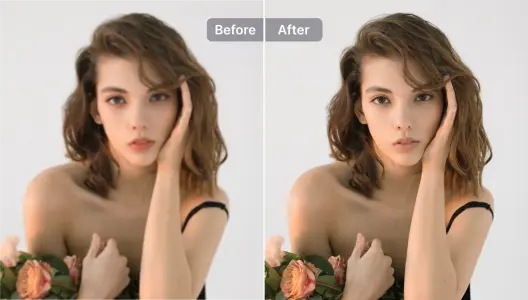
- AI Video Enhancer
- Upscales to 4K
- Sharpens details
- Fixes low‑light issues
- Improves color
- AI Video Denoiser
- Removes grain
- Cleans fuzzy footage
- Good for night scenes or old clips
- Subtitle Remover
- Deletes baked‑in subtitles or captions from MP4, MOV, m3u8
- “No watermarks, no distractions!” as their page says
- Portrait Enhancer for video
- Makes faces look better in vlogs, interviews, TikToks
It also has an AI Photo Retoucher for stills.
So you can fix your thumbnail photo and your video in the same place.
Why I like it:
- You do not need pro editing skills
- The UI is simple
- You can process a clip in a few clicks
- It covers noise, resolution, color, faces, and subtitles, not just one thing
According to the Pixelfox team, uploads are used only for real‑time processing and are not stored or shared.
This is huge for brands that care about privacy and NDAs.
2. Topaz Video AI – great for heavy upscaling
Topaz Video AI is strong for:
- Serious 4K or 8K upscaling
- Film restoration
- Fixing old camera footage
But:
- You need a good computer
- You need to buy a license
- The interface is not as friendly for beginners
I see it as a “power tool” for advanced users.
3. Adobe Premiere Pro + AI features
Adobe adds more AI to Premiere every year:
- Auto reframe
- Noise reduction
- Color match
It is nice if you already live in the Adobe world.
But for someone who just wants to clean a clip fast, it is overkill.
You pay for the whole suite.
You deal with a learning curve.
And the AI enhancement is not as simple as one click.
4. Mobile apps (CapCut, VN, etc.)
These are everywhere.
They give you:
- Basic filters
- Some AI sharpening
- Simple color presets
They are fine for quick social edits.
But they often:
- Add watermarks
- Limit resolution
- Do not give you much control
If you search “???? ??????? ?????” because you want a real jump in quality, these apps usually do not go far enough.
Step‑by‑step: how to use Pixelfox AI for ????? ???? ??????? ?????????
Let’s walk through a simple flow with Pixelfox AI as the main tool.
Say you shot a talking‑head video in a dim room.
There is noise, soft detail, and flat color.
Step 1: Clean the noise
- Go to Pixelfox AI Video Denoiser
- Upload your clip
- Choose a denoise level (start in the middle)
- Run a short preview
- If it looks too soft, pull the strength back a bit
- Export the cleaned version
This gives you a cleaner base for all the next steps.
Step 2: Enhance resolution and clarity
- Open the clean clip in AI Video Enhancer
- Choose your target resolution (1080p or 4K)
- Enable detail enhancement or sharpness
- Preview a short part with faces and motion
- If edges look fake, reduce the effect a bit
You want a clear image, not a “crispy over‑sharpened meme”.
Step 3: Fix color and contrast
Inside the enhancer, use:
- Auto color
- Auto contrast
- Or a neutral preset
Then adjust:
- Brightness so faces are not too dark
- White balance so whites look white, not yellow or blue
Step 4: Polish faces (optional)
For creators, this is a big one.
- Run the clip through AI Portrait Enhancer
- Use gentle skin smoothing
- Keep eye and hair detail sharp
- Avoid “max beauty” mode unless you want a K‑drama poster 😅
Tip
Start with the worst shots in your video when you test settings.
If the worst shot looks natural, the easy shots will look even better.
Step 5: Remove old subtitles or text (if needed)
If your clip has baked‑in subtitles:
- Go to Subtitle Remover in Pixelfox AI
- Upload the clip
- Mark or let the AI detect the subtitle area
- Run the removal
- Check if the background looks clean
Now you can add new captions in your editor or in a different tool.
Advanced tricks with AI video enhancement (for people who already know the basics)
You do not want just a “less bad” video.
You want something that actually looks pro.
So let’s push a bit further.
Trick 1: Enhance your video, then fix your thumbnail photo
Your video can look great.
If your thumbnail looks bad, nobody clicks. That hurts.
You can:
- Take a frame grab from your video
- Run it through Pixelfox AI Photo Retoucher
- Clean skin, remove blemishes, even out lighting
- Use that image as your YouTube or TikTok cover
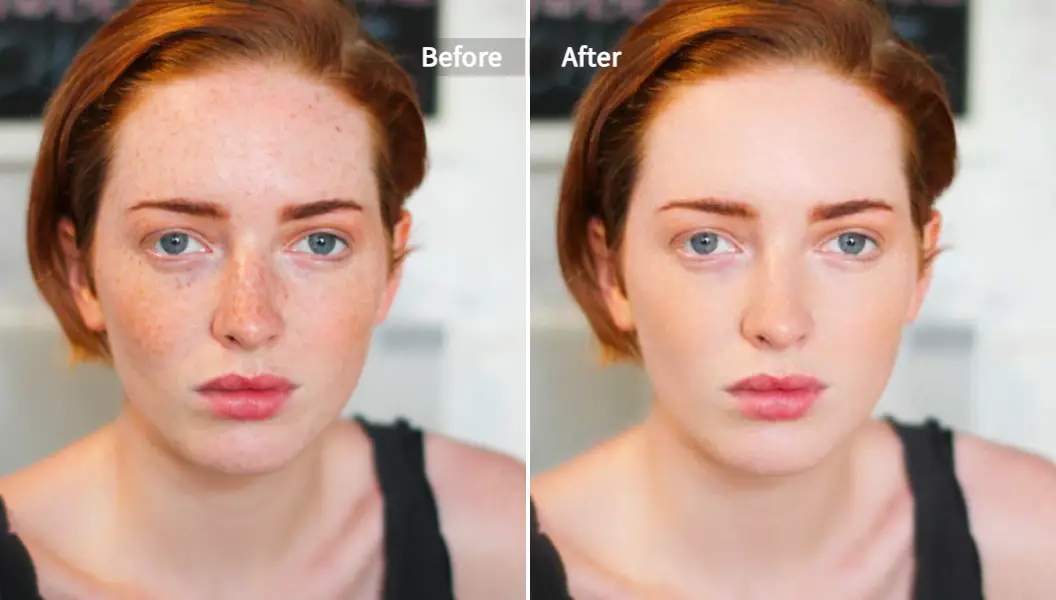
Now the video and thumbnail match in quality.
That small step can change click‑through rate a lot.
Trick 2: Use denoise before heavy color grading
Many people do the order wrong.
They:
- Grade the noisy clip
- Crush the blacks
- Then try to denoise
The result often looks muddy.
Do this instead:
- Use AI Video Denoiser on the raw clip
- Then enhance resolution
- Then do your creative color grade
Your colors stay clean. Your shadows keep detail.
Your export holds up better after compression on YouTube or Instagram.
Tip
Think of AI denoising like washing your car.
You wash it before you wax it, not after.
Trick 3: Make social cuts look expensive
Short videos need extra punch.
You can:
- Use AI enhancer on your main edit
- Export clean master in high quality
- Make all your vertical cuts from that clean file
So every TikTok, Reel, or Short starts from the best possible version.
You get more watch time and better repost quality.
Pixelfox AI vs Photoshop, Premiere, and “old school” methods
You might wonder:
“Why don’t I just use Photoshop or Premiere for this?”
Photoshop
Photoshop is great for photos.
You can fix one frame like a beast.
But video is a different game.
To fix video with Photoshop, you would need to:
- Export frames
- Edit them one by one or in batches
- Rebuild the video
That is slow and painful.
It makes no sense when AI video tools can do full sequences at once.
Premiere Pro / DaVinci Resolve
These editors are powerful.
They have good native tools for:
- Sharpening
- Noise reduction
- Color
- Masks
But:
- They require time to learn
- You need a strong computer
- You need to tweak many sliders by hand
For full‑time editors, that is fine.
For a small business owner or solo creator, it is overkill.
Why AI tools like Pixelfox AI are different
Pixelfox AI is built for people who think:
“I just want my video to stop looking like trash. I do not want to read a 200‑page manual.”
So the tool:
- Runs in the browser
- Uses simple controls
- Gives you fast previews
- Does the heavy lifting with AI instead of 50 manual effects
You can still use Premiere or DaVinci for editing and storytelling.
You just let Pixelfox AI handle the dirty technical work around clarity and noise.
Pixelfox AI vs other online tools
There are many “online enhancers” when you search for ????? ???? ??????? ?????????.
Some are okay. Many are… not.
Let’s look at common issues.
1. Hard limits and aggressive watermarks
Many free tools:
- Limit video length to a few seconds
- Reduce resolution
- Put a big watermark on your clip
They work for tests, but not for real projects.
Pixelfox AI focuses on clean exports.
The own landing pages even say “No watermarks, no distractions!” for tools like the Subtitle Remover.
2. Narrow features vs full workflow
Some tools only do:
- Upscaling
- Or denoising
- Or face retouch
So you jump between three or four sites.
You upload the same file many times.
You waste time and bandwidth.
Pixelfox AI bundles:
- Upscale + sharpen
- Denoise
- Color correction
- Subtitle removal
- Face enhancement
- Photo retouching for thumbnails
in one place.
You fix your whole content pipeline, not just one frame.
3. Questionable privacy
Random free sites often do not say what they do with your files.
You upload work for a client and hope nobody sees it.
Pixelfox AI states that uploads are only used for real‑time processing and are not stored or shared.
This matches what serious users expect and what many Gartner and Forrester reports call out as key: transparent data policy.
Real‑world case studies: how AI enhancement changes outcomes
This part is not theory.
Here is how creators and businesses actually use AI video enhancement.
Case 1: Night‑time vlog that went from “unwatchable” to binge‑able
A small travel vlogger filmed a night market.
Only a phone, no extra lights.
The footage had:
- Heavy noise
- Smudged faces
- Flickering light
They ran the clips through:
- AI Video Denoiser in Pixelfox AI
- AI Video Enhancer to upscale to 4K and sharpen details
- Portrait Enhancer on close‑up shots
The final video:
- Looked clean enough for big screens
- Kept the vibe of the night without ugly grain
When they posted, they saw people actually watch the full video.
The watch time improved compared to older, noisy uploads.
No magic. Just better quality.
Case 2: E‑commerce product video shot on an old phone
A small store owner had to launch a product fast.
They shot product clips on an older phone under office light.
Problems:
- Soft detail on textures
- Strange color on white background
- Old subtitles baked in from a previous campaign
They used Pixelfox AI to:
- Remove the old subtitles with the Subtitle Remover
- Upscale and sharpen with AI Video Enhancer
- Fix color so whites looked clean and products looked true to life
- Retouch a still frame in AI Photo Retoucher for the main product image
The updated product page looked much more “premium”.
People who saw it in ads trusted it more.
And the owner did not hire an agency or spend days in pro edit software.
Common mistakes with ????? ???? ??????? ????????? (and how to avoid them)
Even with good AI tools, people mess things up.
Let’s fix that.
Mistake 1: Pushing sharpness too far
You want detail.
You drag the sharpness slider to the max.
Now everything looks crunchy and fake.
Fix:
Use moderate settings.
Zoom in on faces and edges.
If hair looks like it is made of needles, back off.
Mistake 2: Expecting 240p to become “true 4K cinema”
AI is smart.
It is not a time machine.
If your source is very low quality, AI can only do so much.
You might get a nice 720p or 1080p look, but do not promise “true 4K” to your clients from a tiny clip.
Mistake 3: Running AI on compressed copies
People often:
- Download their own YouTube video
- Run AI on that compressed file
That adds artifacts on top of artifacts.
Fix:
Always use the original export if you can.
Let the AI work with the cleanest version you have.
Mistake 4: Ignoring faces
You fix resolution.
You fix noise.
You forget that people care most about… people.
Faces sell products.
Faces build trust.
Use tools like Pixelfox AI’s Portrait Enhancer to:
- Maintain eye detail
- Smooth skin in a subtle way
- Keep expressions natural
Mistake 5: No test preview
People run enhancement on a 20‑minute clip with random settings.
Then they hate the result.
Fix:
Always:
- Cut a 10–20 second test piece
- Try settings on that
- Lock a good combo
- Then run the full clip
This saves time and nerves.
FAQ about AI video enhancement and ????? ???? ??????? ?????????
How do I choose the right AI tool for ????? ???? ??????? ??????????
Start from your main pain:
- If your footage is noisy, pick a tool with strong denoise (like Pixelfox AI Video Denoiser).
- If your issue is low resolution, you need solid upscaling.
- If you need a full workflow, pick a tool that does noise, resolution, color, and faces together.
Look at:
- Example results
- Limits on length and resolution
- Watermark policy
- Data privacy statements
Then test with one clip before you commit.
Why does my enhanced video still look weird sometimes?
AI can guess wrong.
Common reasons:
- You pushed the effect too hard
- The source file was too compressed
- There is heavy motion, so the AI struggles
Try:
- Lower strength
- Different model if the tool offers it
- A cleaner source file
AI is strong, but it is not magic.
Can AI video enhancement replace a professional editor?
No. And honestly, it should not.
AI is great for:
- Technical clean‑up
- Saving time
- Making low‑budget clips look decent
A pro editor still matters for:
- Story
- Pacing
- Sound design
- Motion graphics
Best setup: let AI do the robotic part, and let humans do the creative part.
What is the difference between AI denoising and normal denoising?
Classic denoising:
- Treats each frame mostly on its own
- Often blurs fine detail with the noise
AI denoising:
- Learns what real detail looks like
- Uses info from multiple frames
- Can remove noise while keeping edges and textures
So AI tends to look more natural when you get the settings right.
Can I use AI enhancers for client work safely?
Yes, if you pick tools that handle data well.
Look for:
- Clear privacy policy
- Statements that uploads are used only for processing
- No rights grab over your content
Pixelfox AI, for example, says that uploaded files are used only for real‑time processing and are not stored or shared.
You still should read the full policy, but this is a strong start.
Where to go next if you care about video quality
If you read this far, you already know more than most people Googling “????? ???? ??????? ?????????” at 2 a.m. with a sad, noisy clip on their screen. (Been there.)
The key ideas:
- Great content still dies if the video looks bad
- AI enhancement can clean noise, fix colors, and sharpen details in minutes
- You do not need pro software or deep skills to get a big improvement
- A tool like Pixelfox AI gives you denoiser, enhancer, subtitle remover, portrait fixer, and photo retoucher in one place
So the smart move now is not to read ten more listicles.
It is to take one of your “meh” videos and run it through an AI pipeline once.
Try this simple flow:
- Denoise in Pixelfox AI
- Enhance resolution and color
- Fix faces
- Remove bad subtitles
- Retouch a thumbnail photo
Then compare the before and after.
You will feel the difference right away.
👉 Ready to stop fighting your footage and let AI do the heavy lifting?
Upload a clip to Pixelfox AI Video Enhancer and see how far you can push your own ????? ???? ??????? ????????? results today.
About the author:
This guide is written from the view of a content strategist who has spent over 10 years working with creators, brands, and video teams, testing dozens of AI tools along the way. The aim is simple: cut the hype, keep the facts, and help you pick tools that actually make your videos look better.